
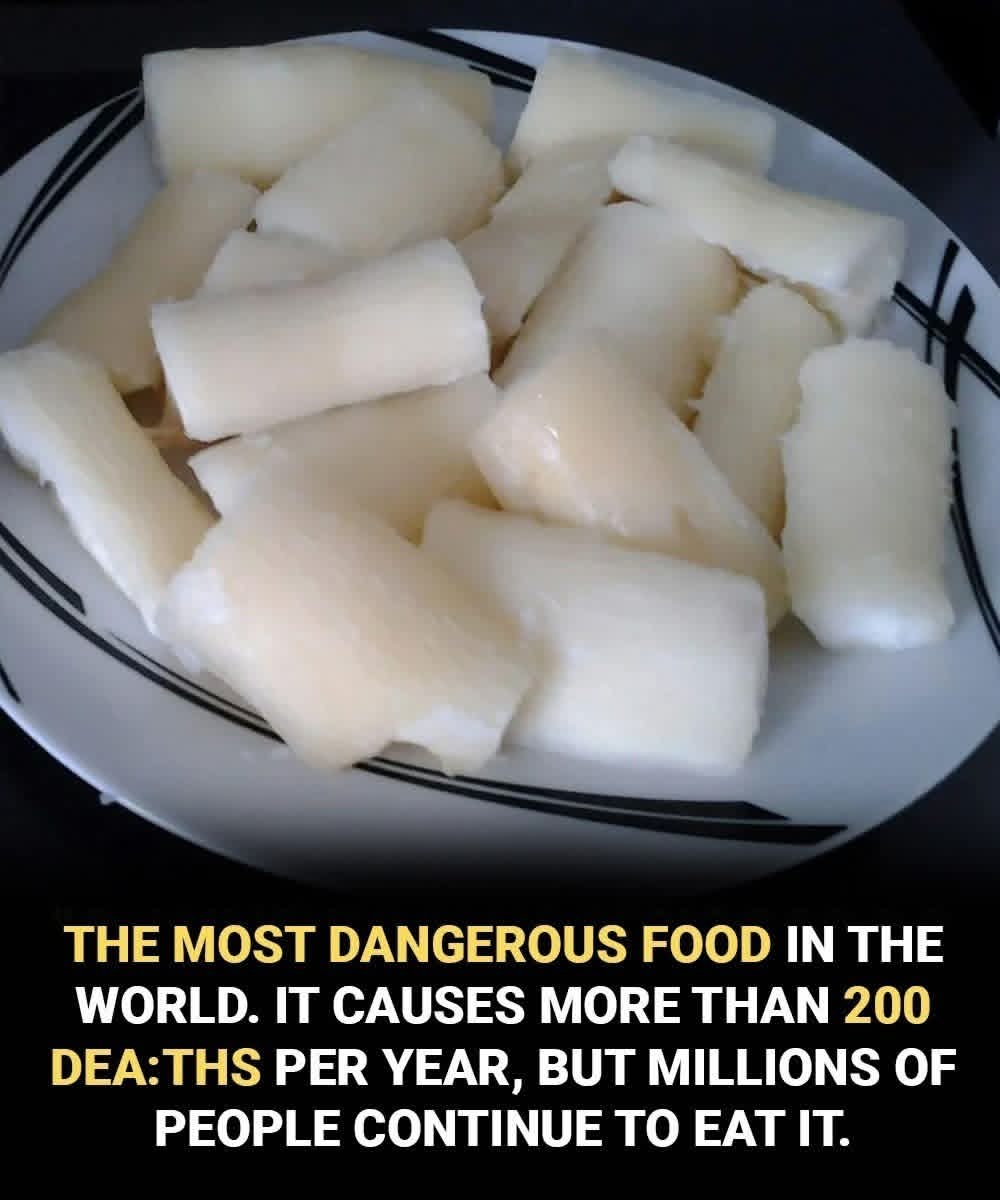
On street corners in Rio de Janeiro, it’s fried into golden mandioca frita. In West Africa, it’s pounded into smooth fufu. Across Southeast Asia, it forms the chewy pearls in your bubble tea. Cassava—also known as yuca, manioc, or mandioca—is the humble, starchy root that feeds nearly a billion people worldwide. It’s drought-resistant, calorie-dense, and incredibly versatile.
But this widely consumed food holds a secret. Within its hardy flesh lies a natural defense mechanism: the potential to produce cyanide. It’s a fact that sounds almost mythical—a plot point from a thriller. Yet, understanding this “other side” of cassava isn’t about fear; it’s about respecting the profound wisdom of traditional food preparation that has safely unlocked its nutrition for millennia.
The Science of the Secret: How Cassava “Creates” Cyanide
Not all cassava is created equal. There are two main types:
Sweet Cassava: Lower in cyanogenic compounds, often safe to peel and boil.
“Bitter” Cassava: The variety that demands respect. It concentrates higher levels of cyanogenic glycosides—natural compounds stored safely in the plant’s cell walls.
Here’s the key: These compounds are not poisonous while intact. The danger is unleashed only when the plant’s cellular structure is damaged—by chewing, grating, crushing, or slicing. This damage releases an enzyme that acts as a key, triggering a chemical reaction that breaks down the glycosides and releases hydrogen cyanide, the toxic gas.
It’s the plant’s brilliant, evolved defense against pests. For humans, it means that improper preparation turns a staple food into a potential poison.
When Knowledge Fails: The Real-World Consequences
Historically, communities who rely on cassava developed intricate, foolproof methods to process it: prolonged soaking, repeated boiling, fermentation, sun-drying, or grating and pressing. These processes allow the cyanide to evaporate or be washed away as harmless compounds.
Tragedy strikes when this chain of knowledge and resources is broken:
During Droughts & Famine: In desperate times, people may shortcut processing to eat immediately or consume wild, uncultivated varieties with higher toxicity.
In Crisis Settings: A lack of fuel to cook it thoroughly, or insufficient water to soak it, can lead to rushed preparation.
Loss of Traditional Practice: As diets globalize, the critical knowledge of how to properly process bitter cassava can fade in some communities.
The results are not just acute poisoning. Chronic, low-level exposure from under-processed cassava, combined with a diet low in protein (which provides the sulfur needed to detoxify cyanide), can lead to a debilitating, irreversible neurological disorder called konzo. This disease causes sudden, permanent paralysis of the legs and has affected communities in Africa during times of war and famine.
The Path to Safety: How Cassava is Mastered
The “good news” in the headline is absolutely true. The danger is entirely manageable with proper technique. Here’s how tradition tames the root:
Peeling: The highest concentrations are in the peel and the inner layer just beneath it. Deep peeling is the first crucial step.
Soaking & Fermentation: Soaking the peeled, cut root in water for days allows enzymes and bacteria to break down the compounds. This is the basis for many traditional foods like gari and fufu.
Thorough Cooking: Boiling is not a quick steam. It involves cutting the root into small pieces and boiling it vigorously in a large pot of water, often with the lid off to allow the gaseous hydrogen cyanide to escape. The cooking water is always discarded.
Drying: Sun-drying or roasting over heat effectively breaks down and evaporates the cyanogenic compounds.
For the home cook using store-bought cassava (typically the “sweet” variety): You are generally safe. It’s still vital to always peel it deeply and cook it thoroughly until soft—never eat it raw. If you ever taste a sharp, bitter bite, spit it out immediately.
A Lesson in Respect, Not Fear
Cassava’s story is a powerful reminder that our relationship with food is deeper than taste and nutrition. It’s about ecology, tradition, and resilience. This root sustains continents not in spite of its toxicity, but because communities learned to transform it with skill and patience.
The “toxic side” of cassava isn’t a reason to avoid it; it’s a reason to honor the incredible food wisdom that has safely brought it to our tables for generations. It teaches us that some of the most nourishing things in life require careful, knowledgeable handling to reveal their true gift.